For many of us, the first indicators of aging are quiet and familiar: a new stiffness in the knees upon waking or the realization that the text on a menu is beginning to blur. But there is a far more consequential “silent biomarker” that dictates your biological trajectory—one that often goes ignored until a crisis occurs. This is your balance.
While we diligently monitor blood pressure and cholesterol, we rarely stress-test the complex neural system that keeps us upright. In the world of longevity and functional neurology, balance is not just an insurance policy against a fall in your later years; it is the ultimate real-time readout of your current neurological health, cognitive processing speed, and physical capacity.
To your brain, balance is a high-stakes coordination of three distinct sensory inputs:
- The Visual System: Using environmental landmarks for orientation and spatial awareness.
- The Vestibular System: The internal guidance system housed in your inner ear that detects gravity and motion.
- The Proprioceptive System: The mechanoreceptors in your joints, ankles, and neck that act as sensory “antennae,” signaling your body’s position in space.
Movement is not just an output; it is vital input. Your brain requires a constant, high-fidelity stream of this sensory information to map where you are in space. When these three systems are out of sync, it isn’t just a physical slip; it is actually a powerful indicator of broader changes in neurological function that ultimately influences your overall health.
The 10-Second Survival Test (The “Flamingo” Posture)
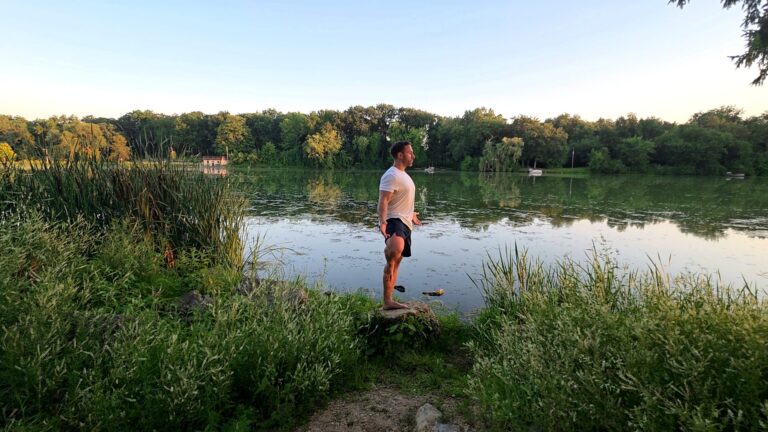
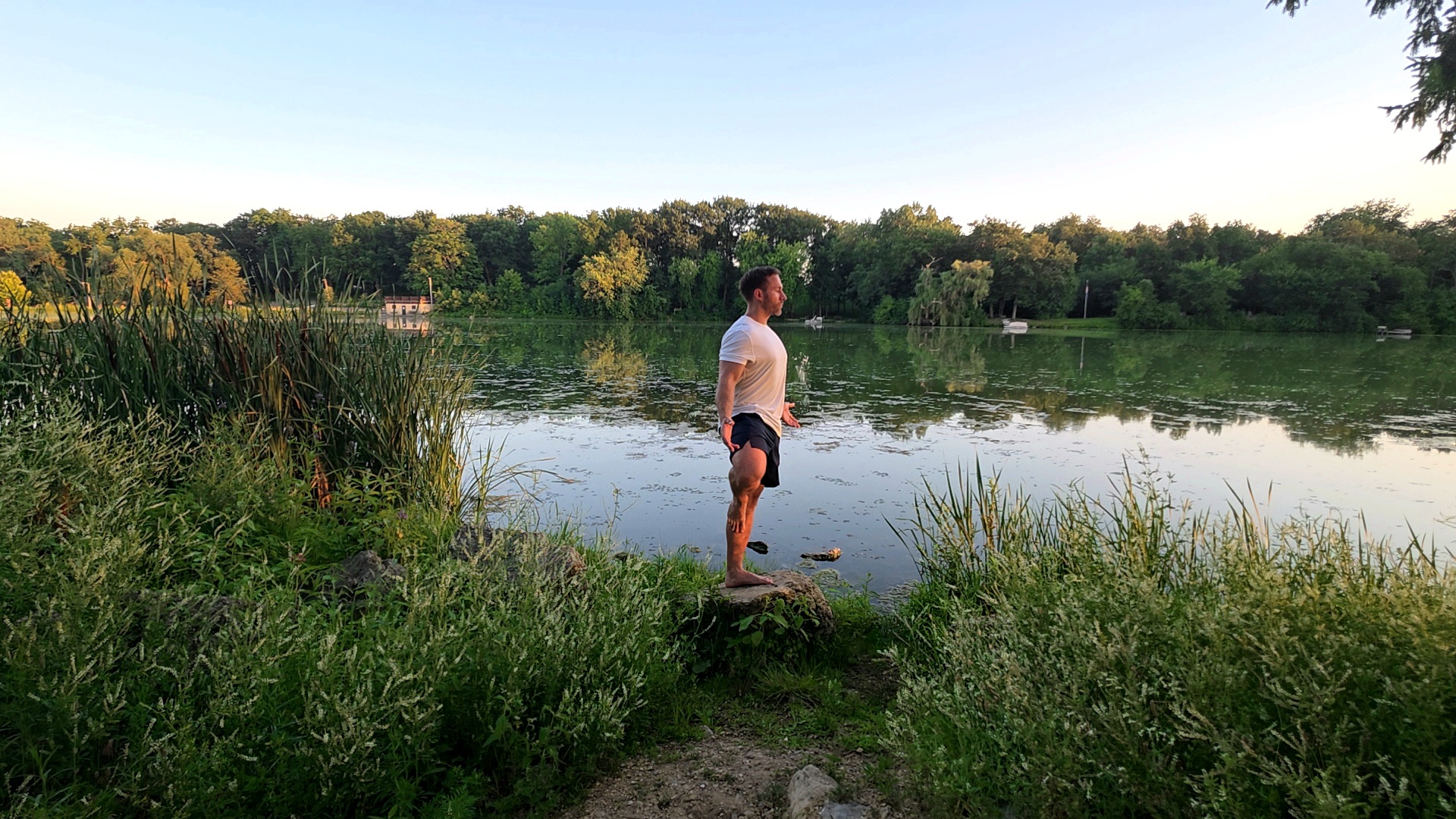
Recent longitudinal data from the CLINIMEX Exercise cohort study has revealed that your ability to balance on one leg for just ten seconds—the “flamingo posture” as it was called in the study—is a profound predictor of your next decade of life. Between 2009 and 2020, researchers tracked over 1,700 participants aged 51 to 75.
The findings exposed a clear “biological cliff”: the inability to pass this test doubles roughly every five years starting in your early 50s.
Failure Rate by Age Cohort
| Age Cohort (Years) | Failure Rate (%) | Relative Risk of Failure (vs. Ages 51–55) |
| 51–55 | 4.7% | Baseline Reference |
| 56–60 | 8.0% | 1.70-fold increase |
| 61–65 | 17.8% | 3.79-fold increase |
| 66–70 | 36.8% | 7.83-fold increase |
| 71–75 | 53.8% | 11.45-fold increase |
What I found most compelling about this study wasn’t simply the difference in mortality between the two groups. Over a median follow-up of seven years, 17.5% of participants who could not maintain a single-leg stance for 10 seconds had died, compared with just 4.5% of those who could.
What makes that finding even more thought-provoking is that the relationship remained after researchers statistically accounted for several other health differences between the groups, including age, sex, BMI, and several health conditions. After those adjustments, participants unable to complete the test still had an 84% higher rate of death during follow-up.
Now, to be clear, this does not mean that poor balance causes an earlier death. Rather, balance may serve as a window into something much larger: how well multiple systems of the body are working together to maintain physical and functional capacity as we age.
And it’s worth recognizing that those systems don’t suddenly become important after age 50. They are being shaped throughout life. Think of balance as an expression of your internal GPS: your brain is constantly integrating sensory information to understand where your body is, how it is moving, and what adjustments are needed to keep you stable.
Aging, injury, health conditions, physical activity, and the environments in which we move can all influence how well this system functions. Modern life may also give us fewer opportunities to challenge it. We sit more, move across predictable surfaces, spend hours looking at screens, and rarely ask our bodies to solve the kinds of varied movement problems they are capable of navigating.
The takeaway is not to fear what a 10-second balance test might reveal. It is to recognize that balance reflects capacities we can continue to challenge and train throughout life. Give your internal GPS reasons to keep adapting.
Peak Insight
Balance is more than a test of whether you can stay upright. It reflects how effectively multiple systems of the brain and body work together to keep you stable, responsive, and adaptable. And those capacities are not fixed—they can be challenged and trained throughout life.
When the Brain Doubts, It Locks the System Out
What happens when the quality of this sensory input drops? When sensory information or stability becomes uncertain, the nervous system may change its movement strategy. Muscle tone can increase, movement may become more guarded, and the body may rely on stiffer strategies to maintain control.
One way to think about this protective guarding is as the nervous system creating a temporary “splint”. When movement feels unstable, painful, or uncertain, increasing stiffness can be one way the body creates more control.
A Simple Rule: If the brain is in doubt, it locks the system out.
This does not mean persistent pain or tension is always a sensory problem rather than a tissue problem. Injury, strength, mobility, stress, tissue health, and many other factors can contribute. But sensory information and perceived stability are part of the picture—which is why changing one input can sometimes immediately change how the body organizes a movement.
This protective response may help explain why some people experience stubborn neck, hip, or lower-back tension that stretching or massage alone does not fully resolve. In those cases, the tissue may not be the whole story. When the nervous system is uncertain about what it is sensing or how safely it can control a movement, it may shift toward a more protective strategy, using tension and stiffness to create stability. So, if we intentionally give the nervous system clearer sensory information and a more confident movement solution, we may be able to reduce the need for that protective strategy.
Move Better, Think Better: The Cerebellum Connection
Why might something as physical as balance have anything to do with how well we think?
Part of the answer may lie within the cerebellum, or the “little brain.” Once viewed primarily as a motor hub responsible for balance and coordination, we now know that the cerebellum participates in much more. It contributes to timing, prediction, error correction, learning, and aspects of cognition and emotion.
This connection helped give rise to what neurologist Jeremy Schmahmann called the Dysmetria of Thought hypothesis. The basic idea is fascinating: just as the cerebellum helps regulate and coordinate physical movement, it may also help regulate and coordinate aspects of thought and behavior. When cerebellar function is disrupted, thinking and behavior can lose some of their organization and fluidity just as movement can.
This gives us another way to think about movement and brain health.
Every time you balance, coordinate a complex movement, respond to an error, or learn an unfamiliar physical skill, your nervous system has a problem to solve. It must gather sensory information, predict what should happen, compare that prediction with what actually happened, make an adjustment, and try again.
Familiar exercise is still incredibly valuable. Strength, cardiovascular fitness, and repeated practice all produce important adaptations. But we can also deliberately create movement experiences that require something different from the nervous system: attention, novelty, balance, coordination, changing sensory information, and progressively more complex movement problems.
This is the idea behind Move Better, Think Better.
Moving better does not automatically make you smarter, nor can we say that practicing balance prevents dementia. The connection is more nuanced—and, in my view, more interesting. Movement can provide a rich environment for sensory processing, prediction, error correction, learning, and adaptation. By continuing to give the brain and body meaningful movement problems to solve, we can train physical capacity while also engaging the neural processes that make learning possible.
Peak Insight
Movement can train more than muscles. When we intentionally add attention, novelty, coordination, and appropriate challenge, movement becomes a learning experience for the nervous system.
The goal is not simply to exercise. The goal is adaptation.
The Neuro-Somatic Solution: Mind-Body Flows
To restore adaptability in your balance system and break the cycle of protective guarding, we must shift our paradigm from quantitative exercise (just burning calories or isolating muscles) to qualitative adaptation.
Large-scale meta-analyses often point to traditional practices like Tai Chi as the gold standard for balance restoration because they require the controlled displacement of mass over a constantly changing base of support. However, the magic isn’t in the specific martial art—it is in the applied neuroscience of slow, deliberate, variable movement.
You can replicate and amplify these clinical results by integrating Mind-Body Flows into your daily routine using two signature neuro-centric cues:
1. The Tripod Foot: “Root, Don’t Claw”
Your foot is your primary sensory antenna to the earth. When balance becomes challenging, many people respond by aggressively curling or gripping their toes, creating excess tension that can limit how freely the foot and ankle adapt. Instead, widen your foot and anchor three distinct points of contact: your heel, the base of your big toe, and the base of your pinky toe. Keep your toes long, soft, and responsive. Root, don’t claw.
2. Embrace the Wobble
True balance training is not about remaining perfectly, rigidly still. Wobble is information. When your ankle twitches and shakes to keep you upright, that is your nervous system actively computing, adjusting, and rebuilding its internal maps in real time.
Take the Next Step in Neuro-Optimization
Adaptation is not just about adding more challenge. It also depends on whether your brain and body have the resources, energy, and recovery capacity to respond.
If this article helped you see brain health differently, the next step is learning how to apply these principles in a guided, progressive way.
Building The Adaptable Brain is a live, four-week brain health and neuroplasticity program hosted primarily in person at Evansville Wellness Group, with a virtual participation option available. Across four weeks, we will explore nervous system regulation, movement as brain training, brain nutrition, and lifestyle inputs that support long-term brain-body resilience.
Reclaiming Your Biological Trajectory
Your chronological age is fixed, but your biological age is far more malleable than most people realize.
An adaptable brain and a resilient body are built through the consistency of your daily inputs, not one perfect workout or one extreme lifestyle shift.
By shifting your focus toward movement quality, intentional tension, and nervous system regulation, you aren’t just preventing a future fall—you are optimizing the metabolic, hormonal, and neurological systems that allow you to perform at your peak today and remain fiercely independent tomorrow.
References
- Araujo CG, de Souza e Silva CG, Laukkanen JA, et al. Successful 10-second one-legged stance performance predicts survival in middle-aged and older individuals. <i>Br J Sports Med</i>. 2022;56(17):975-980. doi:10.1136/bjsports-2021-105360
- Springer BA, Marin R, Cyhan T, Roberts H, Gill NW. Normative values for the unipedal stance test with eyes open and closed. <i>J Geriatr Phys Ther</i>. 2007;30(1):8-15. doi:10.1519/00139143-200730010-00003
- Nofuji Y, Shinkai S, Taniguchi Y, et al. Associations of walking speed, grip strength, and standing balance with total and cause-specific mortality in a general population of Japanese elders. <i>J Am Med Dir Assoc</i>. 2016;17(2):184.e1-184.e7. doi:10.1016/j.jamda.2015.11.001
- Cao C, Cade WT, Li S, et al. Association of balance function with all-cause and cause-specific mortality among US adults. <i>JAMA Otolaryngol Head Neck Surg</i>. 2021;147(4):460-468. doi:10.1001/jamaoto.2021.0057
- Schmahmann JD, Guell X, Stoodley CJ, Halko MA. The Theory and Neuroscience of Cerebellar Cognition. Annu Rev Neurosci. 2019;42:337-364. doi:10.1146/annurev-neuro-070918-050258
- Clark NC. Sensorimotor control of functional joint stability: Scientific concepts, clinical considerations, and the articuloneuromuscular cascade paradigm in peripheral joint injury. <i>Musculoskeletal Sci Pract</i>. 2024;74:103198. doi:10.1016/j.msksp.2024.103198
- Chen W, Li M, Li H, Lin Y, Feng Z. Tai Chi for fall prevention and balance improvement in older adults: a systematic review and meta-analysis of randomized controlled trials. Front Public Health. 2023;11:1236050. Published 2023 Sep 1. doi:10.3389/fpubh.2023.1236050